


Living in Batignolles, north west of central Paris, I find one of the best features is the diversity of ground floor retail. Music stores, workshops to get clothes and shoes mended, paintings framed, and streets like Rue de Lévis where small food stores predominate, are all in walking distance.
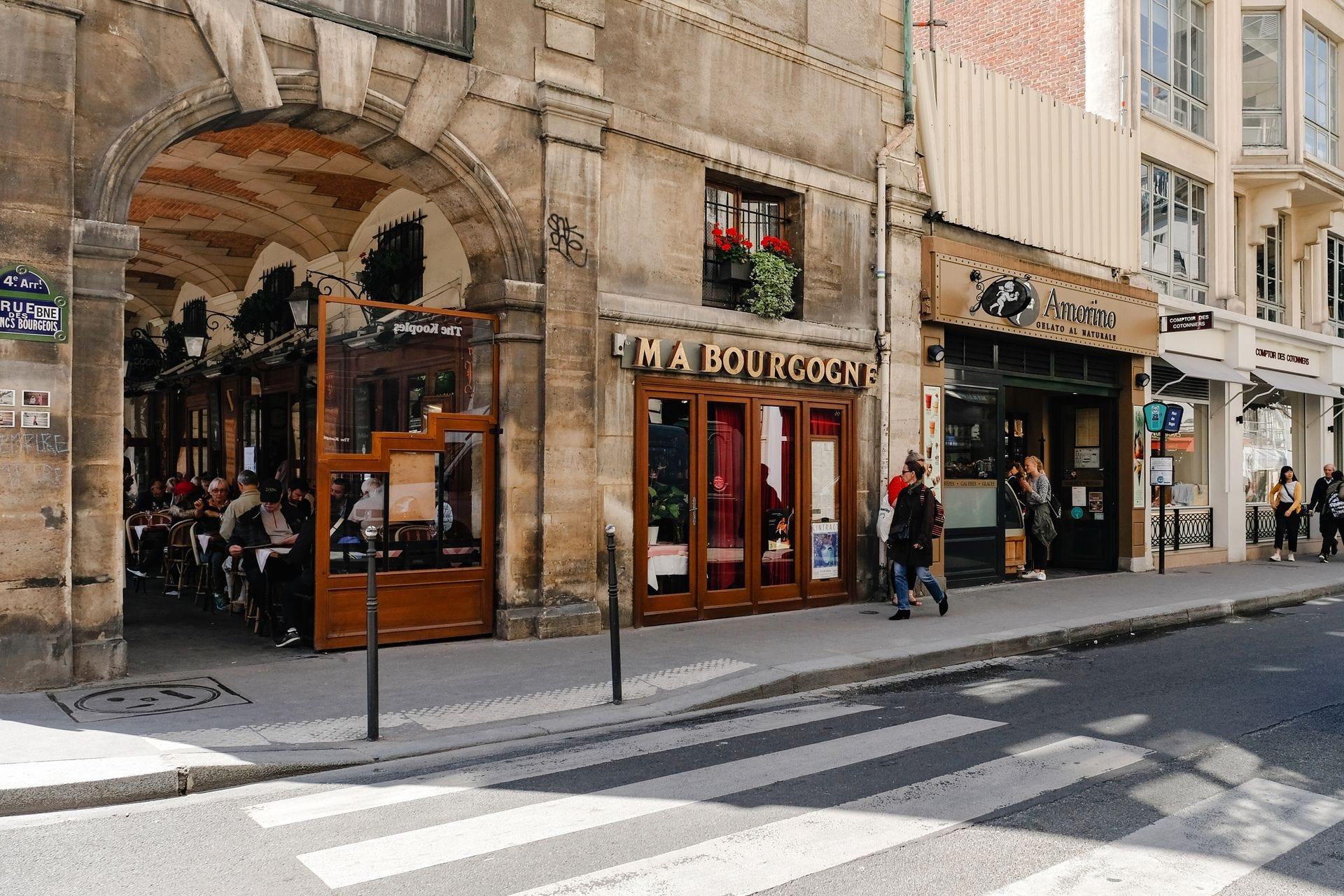
Visitors to Paris and other French cities marvel at the diversity of shops in city centres. Often so small and niche you wonder how they survive.
How do small retailers and artisans in France avoid the crushing rents that push out small retail in London and New York?
A commercial tenant in New York typically signs for five or ten years with no statutory right to renew. At expiry the rent resets to whatever the market will bear, the fit-out is a sunk cost, and the goodwill built over two decades of trading belongs to nobody in particular. Consolidated ownership sharpens the effect: an institutional owner holding a whole block can reposition the block in a way that a multiple individual owners cannot.
France produces a different outcome through four mechanisms working together. Ownership, at least in historic districts, is too fragmented to assemble. Removing a tenant is expensive. Raising the rent is capped. And when a tenant sells the business, the lease is assigned to the buyer, who gets continuity of the existing lease. A fifth protection sits outside the lease altogether, in the planning code.
Fragmented title
In historic city districts, the predominant building type is residential with ground floor retail. Within these buildings, ownership is highly fragmented, divided into separate lots corresponding to apartments or commercial units. This limits the extent to which an individual owner can consolidate ownership of a whole building, or persuade the building owners’ syndicate (copropriété) to authorise redevelopment works. This atomisation of title is a structural barrier to large-scale institutional assembly of commercial space.
At the city level in Paris, one category of institutional owners does have a sizable investment in ground floor retail: social housing organisations. These institutions, like Paris Habitat, RIVP and Elogie-SIEMP, collectively hold 6,800 ground floor commercial premises.
Social landlords let under the same Code de Commerce as private owners. What differs is the letting policy. The three landlords mentioned above market their ground floor units through a single vehicle set up in 2017, which lets at adapted rents with no agency fees and no key money.
The City of Paris also acquires units directly. Between 2004 and 2022, through the operation known as Vital’Quartier, its development company SEM Paris Commerces bought up premises, by pre-emption or private treaty, in streets losing their trade mix. The company renovated the units and let them to businesses like booksellers, food stores and artisans. It continues to acquire units today.
What eviction costs
A commercial tenant doesn’t have to rent from a social landlord to have excellent protection from eviction.
A French commercial lease carries a right of renewal. If a shop owner’s landlord refuses to renew the lease, he must pay the tenant an eviction indemnity equal to the loss caused by the failure to renew. There are only limited exceptions. If the building has to be rebuilt, the law gives the tenant priority for a lease in the rebuilt structure.
The indemnity amount is specific to the business and location. It’s based on a valuation of the business as a going concern, including the leasehold interest. Its takes in factors such as the business revenue over the last three years, the operating surplus, and the costs of disruption for having to move. The indemnity also accounts for the location and floor area of the unit being vacated. Based on a quick online calculation, the indemnity for a 100m² unit in the 17th arrondissement of Paris could range from €250,000 to €500,000.
The exceptions are narrow. No indemnity is due where the tenant is at fault on serious and legitimate grounds, or where the building has been officially declared unsafe.
In short, if the landlord wants to get out of a commercial shop lease, with limited exceptions, he’ll have to fork out several hundred thousand euro to buy out the lease.
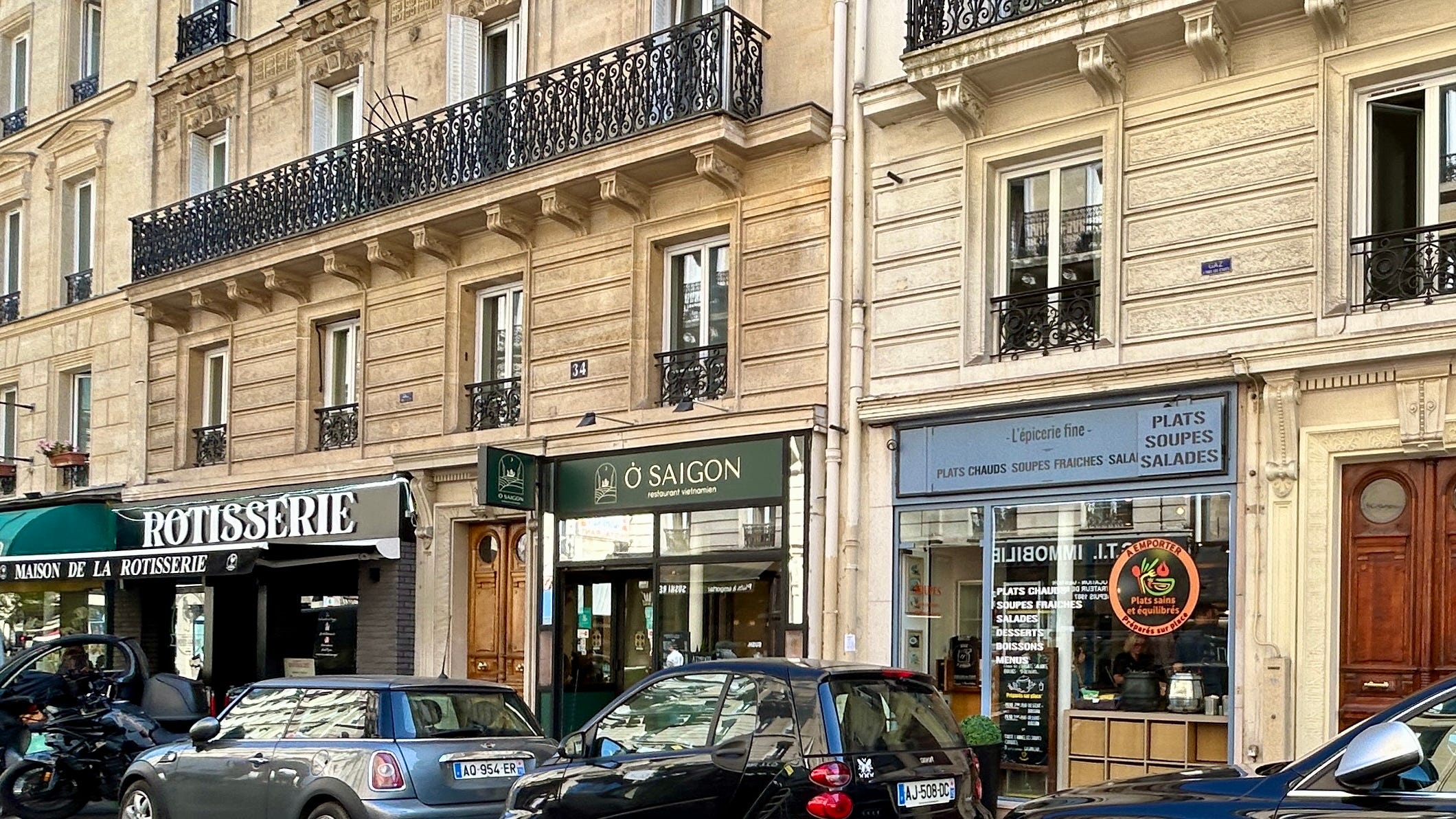
The 3-6-9 lease
Leases for commercial and artisanal businesses are governed by the Code de Commerce (L.145.1 and subsequent articles). The law’s defining feature is a minimum lease term of nine years. If parties agree a lease with a shorter term, it is set aside and the statutory nine years applies, save for limited exceptions such as short-term, non-renewing leases up to three years’ duration.
It’s called a 3-6-9 lease, because the tenant (but not the landlord) can withdraw at the end of each three-year period. The landlord can only give notice before the nine years on a narrow set of grounds, such as reconstruction or renovation. Even then, he generally owes the eviction indemnity, unless he offers the tenant suitable replacement premises.
If there’s no termination within the nine years, the lease is considered to be extended by tacit prolongation. From that point it can be terminated by either side with six months’ notice. A landlord who ends the lease this way and does not offer renewal still owes the indemnity.
Once the nine years is up, you might think the tenant is vulnerable to a steep rent increase, but that’s where indexation comes in.
Capped, then gradual increases
Commercial rents are reset at three-year (triennial) intervals during the lease term, and on lease renewal. The triennial and renewal resets are subject to different capping rules.
Triennial
Either party can request a rent review after three years. If this brings a rent increase, it is capped at the variation in the quarterly commercial rent index or the quarterly tertiary activity rent index, both published by the National Institute of Statistics and Economic Studies (INSEE).
The main exception is if the landlord can prove a material change in the local commercial environment, such as a new metro station, that by itself caused a rental-value shift of more than 10 percent. If proven, the rent is set at market value, but even then the increase is smoothed: capped at 10 percent of the previous year’s rent per year until market value is reached.
Renewal
At the end of the nine-year term, the cap mentioned above continues to apply except in the following circumstances:
The lease was granted for a contractual term of more than nine years.
The lease duration continues past its term without renewal and reaches more than twelve years’ duration.
A material change in factors such as the characteristics of the premises in question; local commercial factors; and rents commonly charged in the vicinity.
As with triennial increases, the increase is smoothed when a cap is removed after the nine-year term. Any increase to market value is phased at a maximum of 10 percent of the previous year’s rent per year until the new market-value rent is reached.
The lease goes with the business
A commercial lease in France is an asset that forms part of the business’s value as a going concern. Imagine a music store owner wants to sell the shop to a new owner. Does the buyer have to sign a new lease with the landlord? No. The existing lease is assigned to them, carrying its accrued tenure and terms intact: the same rent, the same position in the capping cycle, the same renewal date and indemnity obligation. The landlord cannot refuse.
What the buyer pays for is the accumulated gap between the capped rent and open market rent. That gap survives the sale intact, which is why a below-market rent can persist rather than resetting to market each time the shop changes hands.
What the planning code protects
The music shops and workshops I mentioned at the outset are protected by more than their leases. Small retail is also protected in local development plans, like the Plan Local d’Urbanisme bioclimatique (PLUb) in Paris.
The lines in the map below - north west Paris - show different types of “Protection of commercial and artisanal street frontages” in the PLUb. The red line indicates the general protection of retail and craftsmanship frontages. The yellow crossed line indicates special protection for cultural retail. That’s where you’ll find the music shops that serve students of the nearby Paris Regional Conservatory.
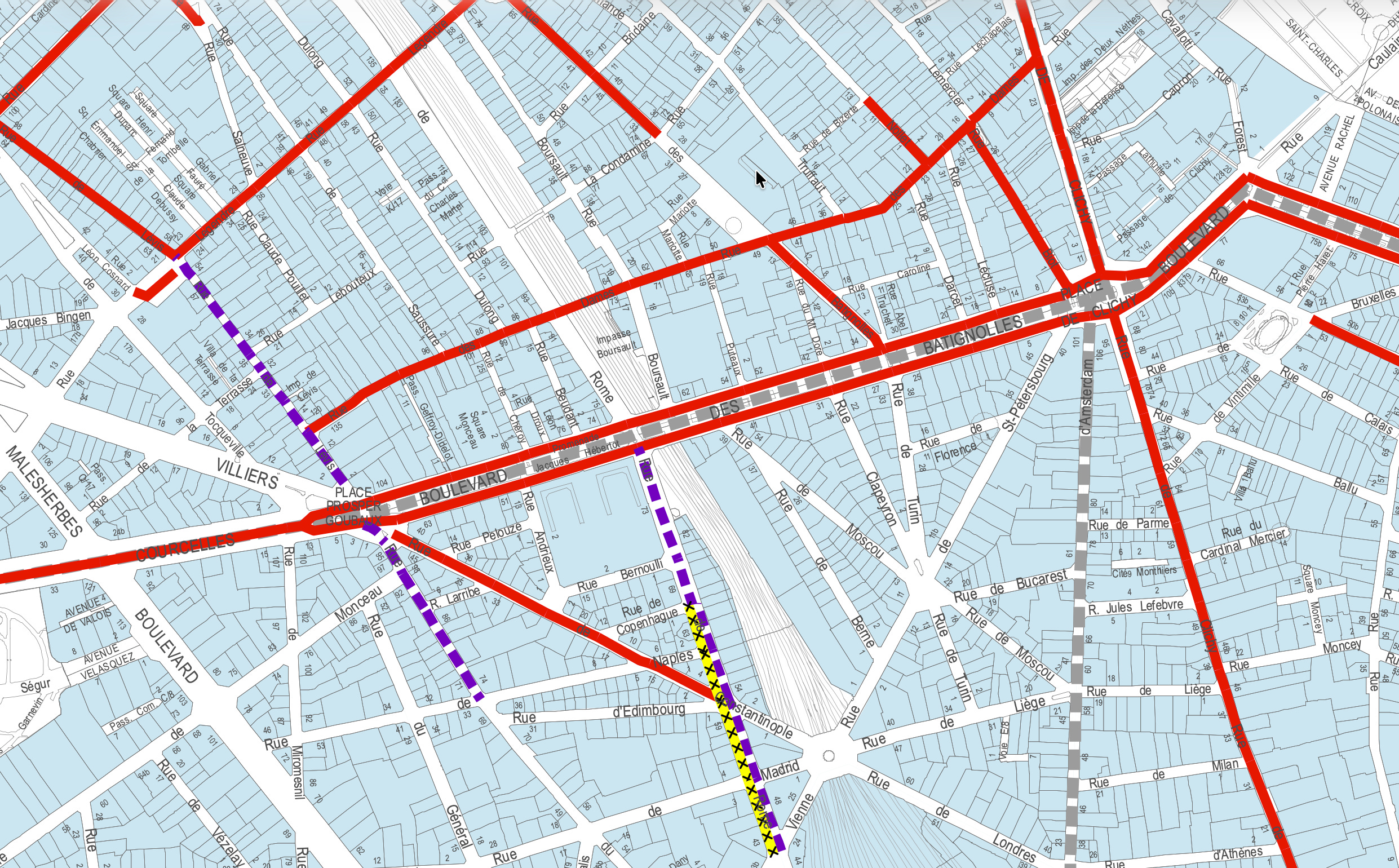
The protections are restrictions on change of use. If a landlord were to evict a sitting tenant, they could only be replaced by tenants of the same type. The PLUb is explicit: “converting ground-floor spaces facing the street that are dedicated to cultural retail into an activity other than cultural retail is prohibited.”
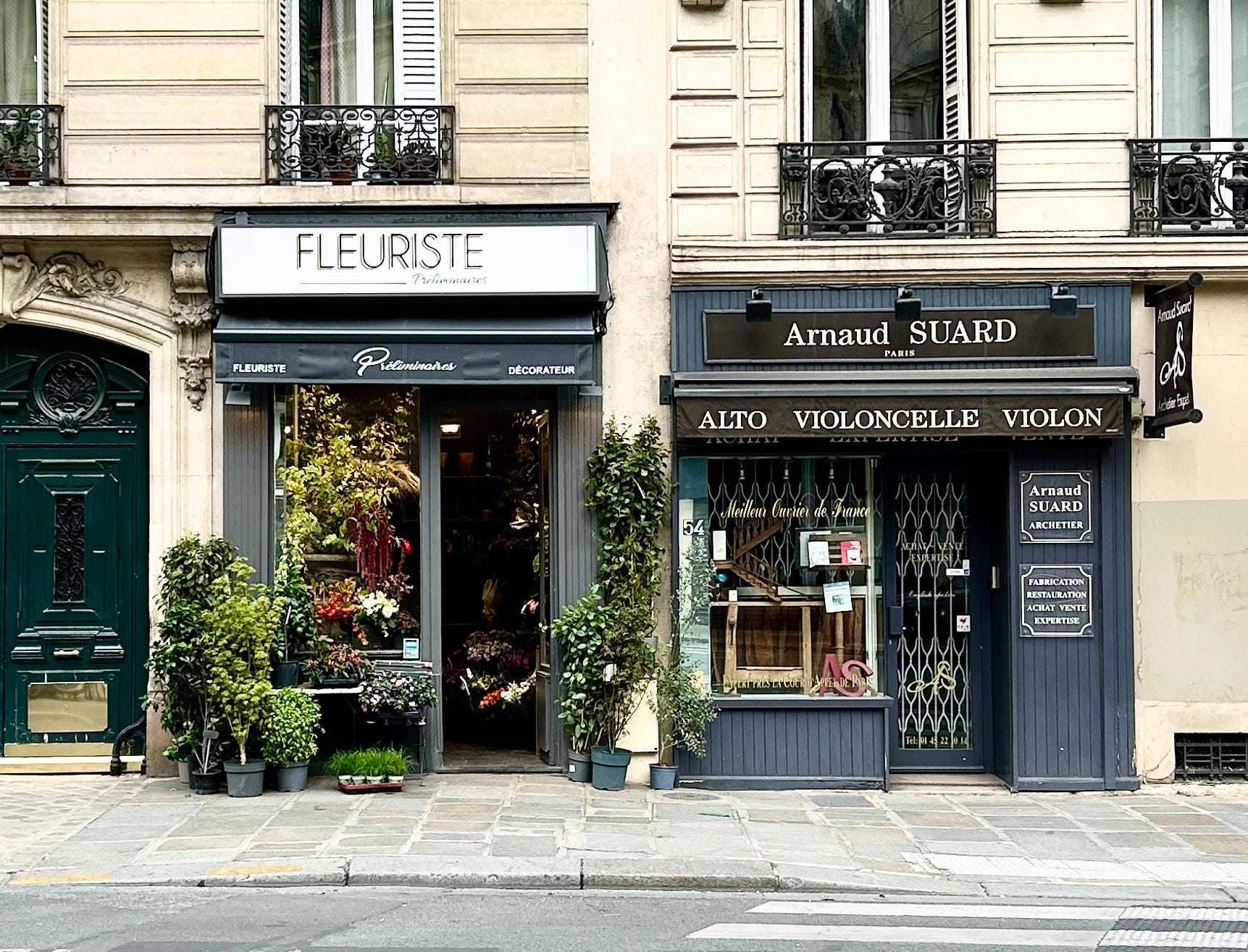
The result on the street
French commercial leases facilitate long tenure, index-linked rents, and a saleable asset that allows new owners take over going concerns without sharp increases to market rent.
Commercial law protects the tenant and urban planning law protects the use. A landlord who pays the indemnity to remove a musical instrument seller may only have bought themselves the right to install a different seller of musical instruments.
Readers on the ownership side will already have spotted the cost. A contingent indemnity of several hundred thousand euro per unit sits against the real estate asset.
These protections apply just as much in a newly-developed district as in a Haussmannian block. In those new developments, whether the ground floor retail experience is of good quality, or whether it gets built at all, is a separate question. One for an upcoming article.
PS: Let me know in the comments or DM me if there’s any aspect of French urban planning and construction that you’d like to know more about.
Wow this is fascinating. I would've written it off as just the unwavering commitment of their audience (which is very true) but that alone wouldn't suffice to have a vibrant local scene apparently. . I remember walking 40 min to the other end of the town just to get to our fav glaces place with my friend, because the others weren't just as good. So i'd like to believe consumers still do play some part 🌞