


Readers outside France have asked me whether French social housing pays for itself. Once the homes are built and let, do rents cover the costs, or does the system depend on a continuous flow of public money?
To answer that question, this article looks at Paris Habitat, the largest social landlord in the capital. It manages around 127,000 homes and houses roughly one in nine Parisians.
The short answer is that the debt largely pays for itself. Rents can service long-term, low-cost loans provided by a public development bank, the Caisse des Dépôts.
What rents cannot cover is the gap between the development cost of a new home and what a tenant paying a below-market rent can afford. That gap is filled by public support in various forms, only some of which take the form of grants.
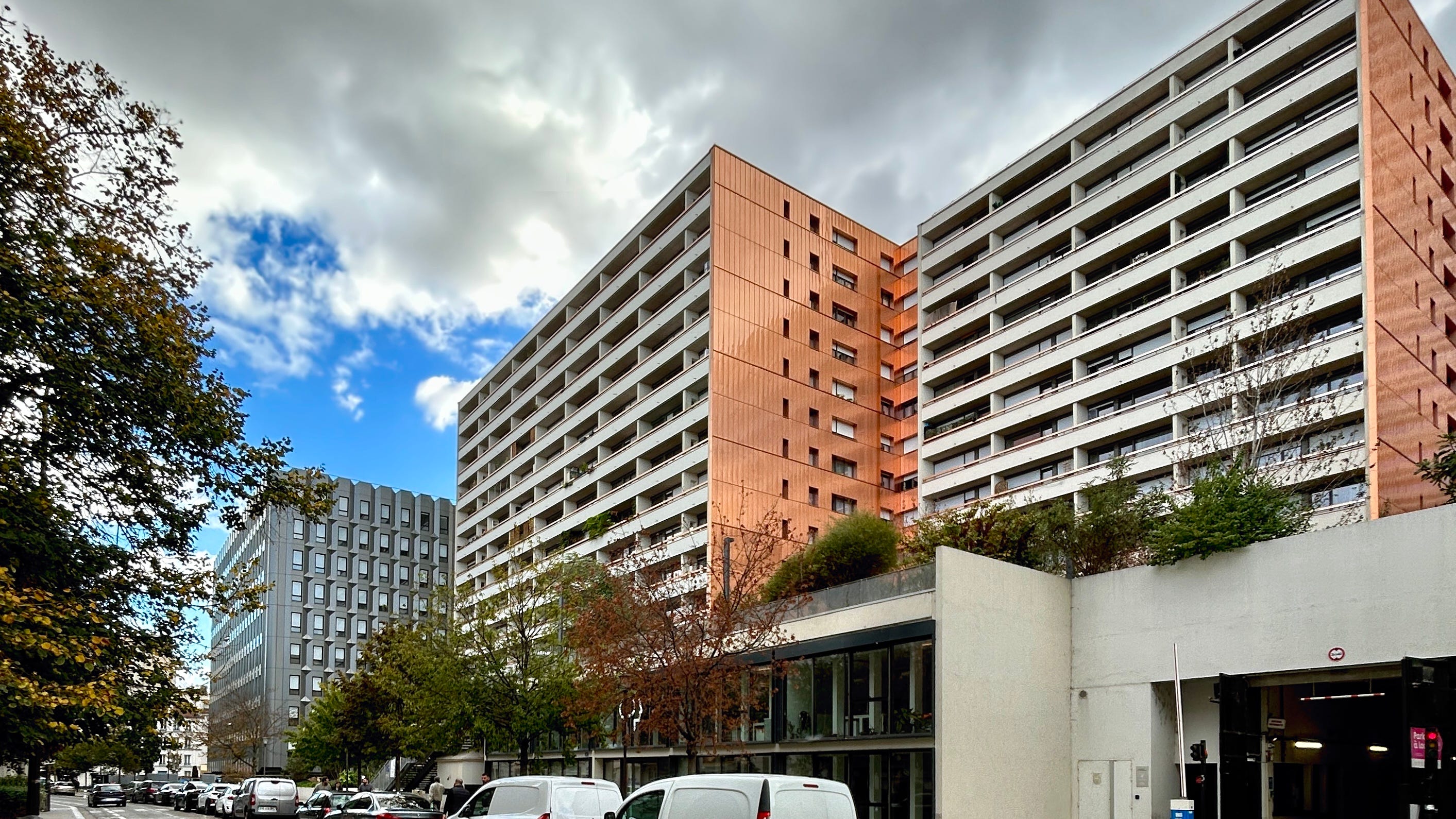
In Decoding French social housing I set out the three main loan types behind French social housing. A PLAI (prêt locatif aidé d’intégration, integration rental loan) funds homes for tenants on very low incomes. PLUS (prêt locatif à usage social, social rental loan) is the standard product and funds most of the stock. A PLS (prêt locatif social) funds homes for tenants with higher income ceilings.
A single development project is usually financed through more than one of these lines.
From savings account to social housing loan
As I described in How savings fund French housing, most of the debt behind French social housing comes from one source: the Livret A, the tax-free, state-guaranteed savings account held by most French residents.
A share of Livret A deposits is pooled at the Caisse des Dépôts et Consignations (CDC), the public financial institution that lends them on to social landlords. At the end of 2024, the CDC had €192.7 billion of loans outstanding for social housing and urban policy. It signed a further €22.9 billion of such loans in 2025.
CDC loans are long term. They run for up to 40 years for the building and up to 80 years for the land.
The interest rate is linked to the Livret A rate, which has been 1.7% since August 2026. PLAI loans are priced at the Livret A rate minus 0.2 percentage points, and PLUS loans at the Livret A rate plus 0.6 points: 1.5% and 2.3% respectively at today’s rate.
Paris Habitat can borrow on these terms because of its status. It is an office public de l’habitat (OPH, public housing office) attached to the Ville de Paris, and therefore an approved social housing body. That makes it eligible for PLUS and PLAI loans, which only the CDC distributes. Each loan is backed by a guarantee from the Ville de Paris.
The link to the Livret A rate cuts both ways. When the rate stood at 3% from February 2023 to February 2025, social landlords’ borrowing costs rose with it.
Paris Habitat's financing
Paris Habitat’s own figures show how a new home is paid for. Across the homes it had approved for funding in 2024, the housing cost of €245.4 million was financed as follows: 49% from regulated CDC loans, 35% from direct subsidies, 13% from Paris Habitat’s own funds, and 3% from Action Logement (the employer-funded housing body) and other lenders.
The own funds come from surpluses generated by the existing stock. In 2025, Paris Habitat’s self-financing capacity was €260 million.
The development cost of those 2024 homes averaged €6,923 per square metre of usable floor area, up from €4,001 in 2023. Part of that rise reflects a different mix of projects rather than inflation alone.
That figure is specific to Paris and well above the national picture. Across France, CDC loans cover around 70% of the cost of delivering social housing. In Paris, they cover less than half, so grants have to fill much more of the gap.
The Ville de Paris provides those grants project by project. In 2021, for example, the Conseil de Paris (city council) approved a maximum subsidy of €746,644 for a 20-home Paris Habitat scheme on rue Custine in the 18th arrondissement, about €37,000 per home.
Seven forms of indirect support
35% direct subsidy share in Paris Habitat’s 2024 programme is the visible part of public support. Several other financial and tax advantages lower the cost of French social housing:
The tax-free Livret A: because interest is untaxed, savers accept a lower rate than they would on a taxable account. The tax forgone by the state is what keeps the CDC funding affordable for social landlords, and the state also guarantees the deposits.
Reduced VAT: new social homes pay VAT (value added tax) at 5.5% or 10% rather than the standard 20% paid on open-market new homes. The 5.5% rate applies to PLAI homes and to PLUS homes in the national urban renewal programme; other PLUS homes and PLS homes pay 10%.
Property-tax exemption: new social homes are exempt from taxe foncière (the annual property tax, collected mainly by communes) for 25 years, or 30 years where environmental criteria are met. (The state compensates communes only partly, so much of the cost falls on the local authority that hosts the housing.)
Loan guarantees: the Ville de Paris guarantees Paris Habitat’s CDC loans, carrying the risk of default at no charge. Guarantees are rarely called on, but without them the CDC would not lend on the terms it does.
Corporate tax exemption: social housing bodies pay no corporate income tax on their social housing activity.
Land: public land can be sold at a discount or leased long term. In a ZAC (zone d’aménagement concerté, planned development zone), plots for social housing are priced at around 65% of the land charge for open-market housing, with the open-market homes making up the difference. Private buyers, in effect, contribute. My article on ZACs explains more: Who pays for a new neighbourhood.
Housing benefit: the APL (aide personnalisée au logement) is a means-tested state benefit for tenants. For social housing tenants it is usually paid directly to the landlord and deducted from the rent, which secures the landlord’s rental income.
While none of these appears as a subsidy in Paris Habitat’s financing plan, each one lowers the cost of developing or letting a home.
Paris is not typical
Paris sits in zone A bis, the highest of France’s housing-pressure categories, which covers the capital and its most expensive neighbouring communes. Land there is scarce and costly.
Development costs have also risen faster in Paris than elsewhere. According to the Banque des Territoires, the CDC’s lending arm, the development cost of social housing rose 11% across France between 2019 and 2023, and 24% in zone A bis.
Planning policy adds to the pressure. The national ZAN target (zéro artificialisation nette, net-zero land take) aims to halt the development of farmland and natural land. In a city with little free land, that pushes social landlords towards more complex and costly projects: converting offices and car parks into homes, and building additional storeys on existing buildings. Paris Habitat’s recent programme includes all three.
Paris therefore shows the French system under maximum cost pressure, not its national norm.
Hamburg's profitable municipal landlord
The German port city of Hamburg offers a useful comparison. Its municipal landlord, SAGA, is wholly owned by the city and of similar size to Paris Habitat, with around 140,000 rental homes.
SAGA’s homes generated an average rent of €7.56 per square metre per month in 2025, about a quarter below the mean of the city’s Mietenspiegel (reference-rent index), €9.94 per square metre. It made an after-tax profit of €238 million in the same year. On those figures, SAGA looks like proof that municipal housing can pay for itself.
How it works differs from Paris in three respects.
The first is the source of its cheap loans. IFB Hamburg, the city’s investment and development bank, provides about 54% of SAGA’s long-term loans; commercial and savings banks provide most of the rest. Like the CDC, IFB is a public lender, but it is owned and guaranteed by the city and raises its funds on the capital markets, not from a national savings scheme. Hamburg can do this because it is a city-state with the powers of a German region. Paris has no equivalent and relies on the national savings base through the CDC. SAGA also carried €103.8 million of public investment grants on its balance sheet at the end of 2025.
The second is that money flows both ways. SAGA paid €150 million to the city in 2025 and recorded €80.9 million of corporate income tax in the same year. Paris Habitat pays no corporate tax on its social housing activity and reinvests its surplus.
The third is the role of older housing stock in the portfolio. Only about 30,000 SAGA homes are currently publicly funded. In Germany, rent and occupancy restrictions lapse when public funding ends, so the homes become unrestricted stock. Yet that stock still lets at an average of €7.78 per square metre, well below the reference mean, because the original loans are largely repaid. In France, by contrast, social homes stay social after their loans are repaid. Paris Habitat’s 40,000 HBM homes (habitations à bon marché, pre-war low-cost housing) still let at social rents and help generate the surpluses that fund new building.
SAGA shows that a municipal landlord can be profitable while charging low rents, though the model is not subsidy-free: it still draws on subsidised loans and public grants to build.
What rents cover, and what they don't
Do rents cover the costs once homes are built and let? Largely, yes. As operators, Paris Habitat and SAGA are both financially self-sustaining. They generate surpluses, repay their loans and reinvest. That depends on rents keeping pace with costs: ANCOLS, the national social housing inspectorate, has warned that without annual rent increases Paris Habitat cannot deliver its investment programme, yet its rents were frozen for 2026.
What rents cannot pay for is the gap in a new-build programme, between what a new home costs and what its tenants can afford.
The comparison also shows where the real support lies. Long, cheap borrowing does more of the work than upfront grants: it is what allows rents well below market levels to repay the cost of a home over decades.
That kind of capital is organised above the level of the individual landlord: through a national savings base in France, and through a city-state’s own development bank in Hamburg. In the United States, Montgomery County in Maryland has set up a $100 million revolving loan fund for publicly owned, mixed-income housing, an attempt to create similar capital at local level.
French social housing does not need a continuous flow of public money to keep its existing homes running. It needs it each time it builds a new home, and for major retrofits of older stock.