


France’s low-carbon building code, RE2020, has added an estimated 11% to the cost of new housing. The government responded with updating decree effective 1 July 2026.
The pattern will feel familiar in the UK, Ireland, Australia or North America: a low-carbon, energy-reducing regulation creates a cost premium, and gets a lot of the blame for a housing slowdown. France’s case is worth a look for anyone watching the same trade-off unfold at home.
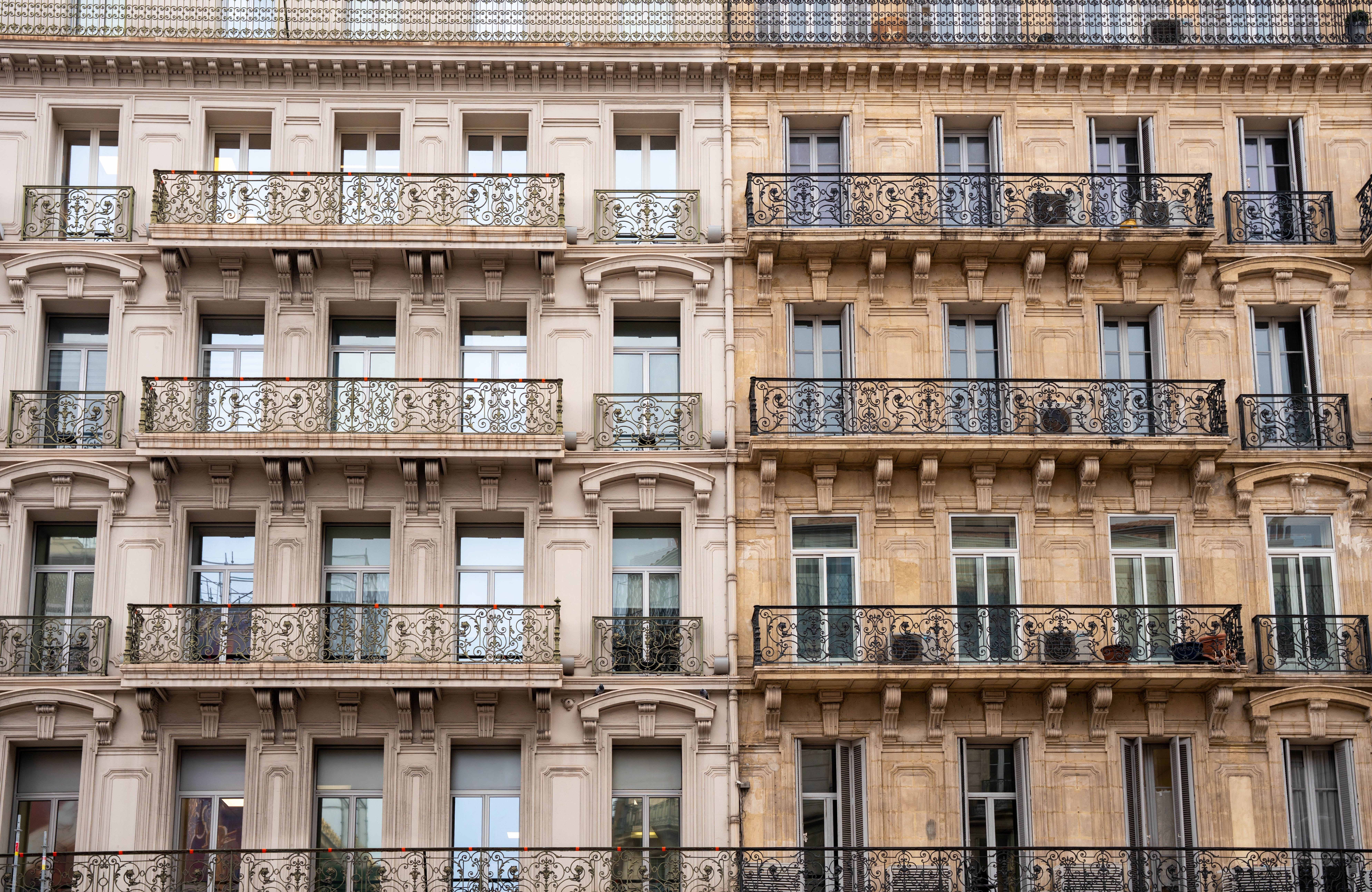
Before RE2020, French buildings were constructed to meet Réglementation thermique RT2012. The requirements of RT2012 covered:
Primary energy consumption.
Thermal performance of the building envelope.
Summer comfort, measured by the conventional interior temperature, a static indicator based on a conventional five-day heatwave. The RE2020 replaced it with the degree-hour indicator.
RE2020 enhanced the regulation in pursuit of more efficient and decarbonised energy consumption; reduction in carbon impact of building elements and site works; and greater occupant comfort during periods of intense heat.
Specifically, it requires calculation of:
Non-renewable energy consumption.
Greenhouse gas emissions from buildings’ energy consumption over 50 years.
Greenhouse gas emissions from the construction product life-cycle and site operations.
From 1 May 2026, RE2020 is no longer mainly a housing and office regulation. 13 new building types have been added to the framework: hotels, restaurants, retail, childcare facilities, hospitals, universities, sports facilities, and industrial buildings among them.
RE2020 brought two areas of cost increase
Materials. The carbon impact limits drive a need for low-carbon alternatives to standard materials such as concrete and fossil fuel-based insulation. As alternatives have been less available in the market, and builders less familiar with them, the price is typically higher, even with increased demand.
Learning curve. When designers implement a new design requirement and new tools for design calculation and reporting, when builders adopt new (or ancient) materials, fees and labour rise. In the period after a new regulation, these costs are added to the project budget.
Two cost drivers - the move away from concrete and towards heat pumps
The concrete industry mounted a strong campaign against the mandated methodology for calculating carbon impact in the life-cycle assessment (LCA). The dynamic LCA method weighs near-term carbon emissions more heavily than future emissions. Another debate occurred when a revised carbon calculation standard was adopted (EN 15804+A2). This time it was the timber industry calling for change: the new standard treats biogenic carbon as cycle-neutral, meaning no sequestration credit for timber.
The shift from gas condensing boilers to heat pumps, district heating and photovoltaics brings higher capital costs. That didn’t stop heat pump penetration in individual housing surging from 47% in 2022 to an estimated 71% by 2024. Nonetheless, industry groups point out the difficulty for small builders in adapting to complex thermal envelopes and heat pumps.
What’s the real cost impact?
Before RE2020 came into effect, a Senate Information Report (No. 434 of 2021) noted the government-acknowledged added costs of +3% to +5% initially, +5% to +8% from 2024 to 2030, and +7.5% to +15% from 2030. It also recorded industry estimates of up to around 10% in the short term (the FFB around 9%, the CAPEB 7% to 10%), while the study the Senate itself commissioned put the increase for individual housing at 3.4% by 2024.
Despite calls to compensate energy suppliers for a demand shock, and households and professionals for increased costs, the government did not introduce subsidies. The Ministry of Ecological Transition argued that the regulation would drive industrial competitiveness and enhance the export positioning for French construction.
Limited government support at first. By 2024, the housing slowdown was too much to ignore.
In the face of early opposition, the government referred back to the early years of implementing the previous standard, RT2012. Despite widespread industry predictions of a 10 to 15 percent cost increase at RT2012 introduction, a study by the association of quantity surveyors found the observed outcome to be negligible, with learning effects absorbing the theoretical cost increase. The government also pointed to energy savings that RE2020 would drive.
From 2023 onwards, housing production indicators deteriorated sharply. Thereafter, the government discourse shifted from “competitiveness” to protecting “the sustainability of the regulatory trajectory”. To get a proper insight into the RE2020 cost impact, the Minister for Housing, Valérie Létard commissioned the Rivaton report in March 2025. It’s the most up-to-date and independent economic analysis of RE2020-induced costs.
The Rivaton report (July 2025) quantified additional costs of 11 percent due to RE2020
What Rivaton found:
RE2020 induced additional costs of +11% across the full trajectory to the 2031 milestone (excluding learning effects). The increase is broken down as +2% for insulation, +3% for heating and domestic hot water, and +6% for low-carbon materials. (The government states the 11% figure as materialising by 2035, once buildings meeting the 2031 threshold are built out; some industry bodies frame the same +11% as covering the 2022 to 2031 period.)
The move to a tighter standard for calculating carbon emissions (EN 15804+A2), without a proportionate adjustment to the limit in RE2020, made previously compliant designs non-compliant.
The degree-hour (DH) methodology to measure summer comfort is insufficiently granular to reflect actual heat stress patterns under climate change scenarios, and the regulation’s treatment of active cooling was deemed overly restrictive.
The current regulatory framework creates perverse incentives to sacrifice amenities that raise living standards (balconies, loggias, ceiling heights, glazed surfaces), to hit carbon targets.
The report added some qualifiers:
Rivaton was asked to test whether the 2025, 2028 and 2031 implementation milestones are sustainable, not to reopen the case for RE2020 itself. He is explicit that the +11% figure is a verdict on the pace of implementation, not on the regulation’s merit.
The report is built on 62 stakeholder hearings and independent analysis of around fifteen recent operations. That’s a smaller sample than the earlier 40-project study by the quantity surveyors’ industry organisation. Rivaton flags his report as a picture rather than a comprehensive census of RE2020-related building costs.
As with every study before it, Rivaton acknowledges he cannot cleanly separate the RE2020-induced costs from other drivers: material price inflation from 2021 to 2022, the interest rate shock.
Qualifiers aside, the cost of housing couldn’t be ignored, and changes are underway.
What Rivaton recommended:
Keep the calendar, adjust the dial. The report explicitly argues against suspending or delaying the 2025, 2028 and 2031 milestones, on the grounds that regulatory instability would cost the sector more than the thresholds themselves.
Instead, the report proposes raising the 2022 to 2024 carbon ceilings by around 40 kgCO₂/m² (roughly 5%) to correct for the A1 to A2 methodology change that made previously compliant designs non-compliant.
A recurring principle in the report is that carbon compliance should not be bought at the expense of balconies, ceiling height or glazed surfaces, so it recommends threshold modulations for ceiling heights above 2.5 metres and for external amenity space.
Rivaton calls for the degree-hour indicator to be revised to reflect real heatwave risk, and for the effective prohibition on active cooling systems to be lifted, arguing the current rules leave new housing genuinely exposed to climate-driven heat stress.
The government has already acted.
A decree (n°2026-200, March 2026) updated RE2020 and came into force on 1 July 2026. It did not adjust the carbon limit as Rivaton recommended, to correct for the shift from EN 15804+A1 to EN 15804+A2. This has been held over for a later decree.
What the 1 July decree did was adjust the carbon assessment parameters to allow for more ceiling-height and external amenity space. There’s also an allowance for upward extension with additional floors, and a softened regime for high-rise buildings.
Summer comfort measures are still pending. The degree-hour indicator overhaul was deliberately held back from the March 2026 package because of its technical complexity, and a second decree addressing it is expected later in 2026. This same second wave is also expected to include the carbon-ceiling adjustment for EN 15804+A2. As of writing, no draft text has been published.
The easier fixes came first: more ceiling height, more balcony space. The harder ones, correcting the carbon limit and revising the degree-hour rules on summer heat, are still to come.